About Me
I spent fifteen years building systems for machines. Now I help people understand the systems inside themselves.
That sentence is not a slogan. It is the most accurate description I have of how I got here.
This page is not a résumé. It is the story of a change of direction, and an honest account of where my training currently stands.
Based in Kitchener, Ontario · Coaching online
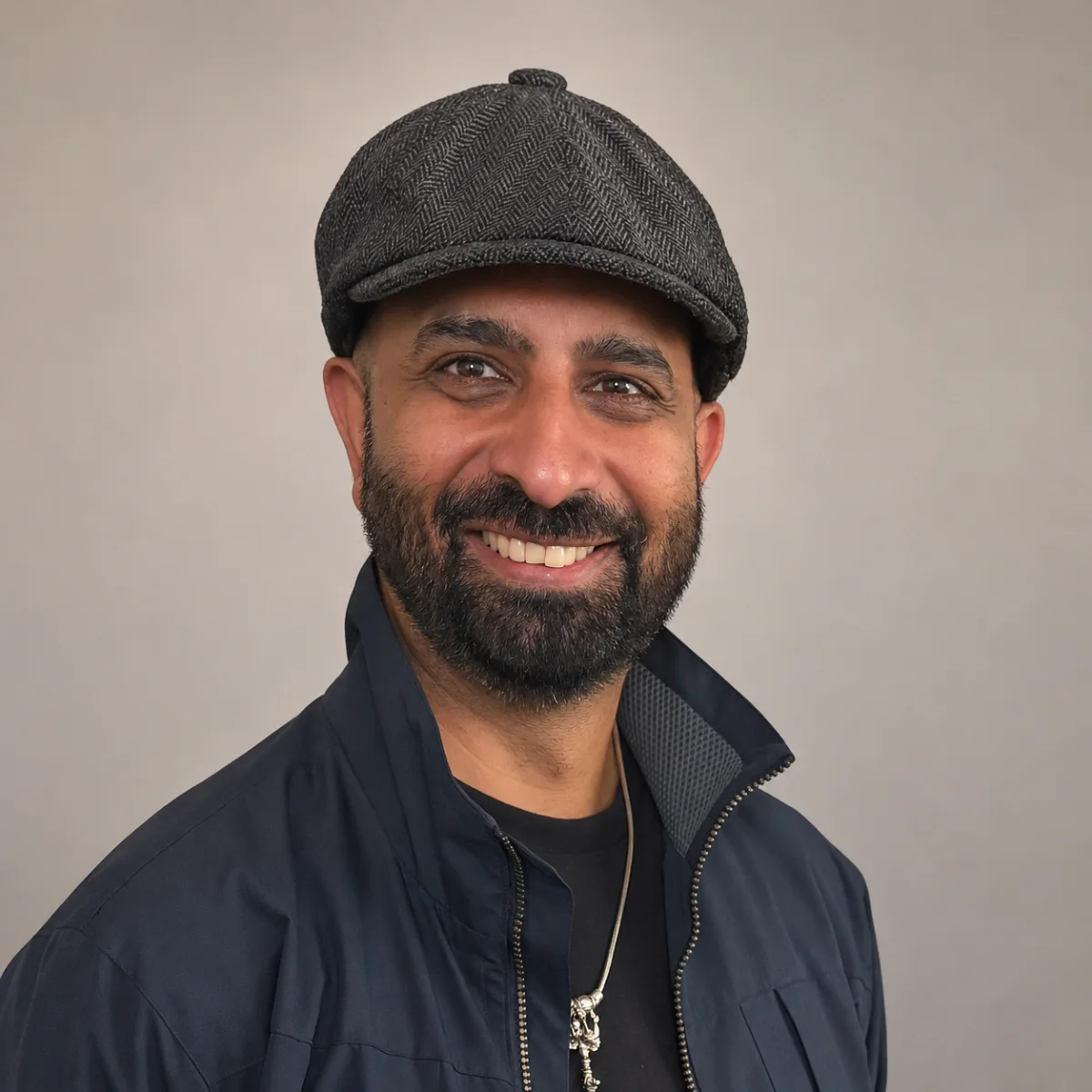
Fifteen years of systems
For more than fifteen years I worked as a software engineer, building large-scale digital systems alongside people I respected, at companies including Meta Platforms and Loblaws Digital. Much of that work happened in product organisations built around ambition and speed, and several of those years were spent living in New York City.
Technology trains you to think in systems. You learn how small structural decisions shape behaviour at scale, and how the architecture of a thing quietly determines which outcomes are possible. Environments like that also teach you something less comfortable: how easily chronic urgency starts to feel like a normal way to live, and how much of a life can be postponed in the name of getting somewhere.
A turn
Over time I began to notice that the problems that mattered most to the people around me were not technical. Friends and colleagues — some of them outwardly very successful — were privately stuck on questions that no productivity system, better tool, or amount of discipline had touched. The systems shaping our lives turned out not to be only digital. They were biological, psychological, relational, and practical, and largely invisible to the way we usually talk about change.
Eventually I stepped away from the technology industry and took time to travel, reflect, and rebuild my own health. That period became the turning point. I began studying the body, nervous-system regulation, and psychology — first out of curiosity, then with professional intent. What I found was a second kind of systems thinking: the nervous system is an architecture too, and it decides a great deal about what feels safe, what feels possible, and what is worth wanting. That idea is the basis of everything I do now.
Where I am now
That exploration led me back into formal education, and I want to be precise about where that stands.
- I am a Registered Massage Therapy student at Conestoga College, studying body-based therapeutic practice.
- I am a psychology student at the University of Guelph, studying psychological frameworks and how they interact with the body.
- I volunteer with the Canadian Mental Health Association, supporting people through grounded conversation, emotional support, and practical regulation strategies.
- I have completed trauma-informed training through Wilfrid Laurier University, which shapes how I approach safety, care, and pace in this work.
- I have studied somatic and nervous-system approaches, including Somatic Experiencing and polyvagal theory, and I continue to study them.
- My long-term goal is to continue deepening this work and to pursue designation as a Registered Psychotherapist.
I am transparent about this because it matters. I am not a psychotherapist, I am not a Somatic Experiencing practitioner, and I do not present myself as either. My coaching practice is built on what I have trained in, studied, and practised — nervous-system awareness, somatic principles, systems thinking, and structured conversation — and it stays carefully inside that scope.
How I work
I work one-to-one, in conversation, over time. The aim is not motivation or a better system for managing your life. It is a life you are actually inside of: enough steadiness to meet an ordinary difficult week, a structure that does not require a good week to be sustainable, and the willingness to participate in what you have built.
I care about dignity more than motivation, and about capacity more than hustle. Growth that has to be forced is usually growth that will not hold. When people come to understand their own system, they stop needing to be pushed — the direction becomes theirs.
That is also why I do not tell people what their life should look like. I bring structure, reflection, and honest observation. You bring your life, your questions, and your authority over your own direction. The ideas behind the coaching are written up separately, as the philosophy, for anyone who wants the thinking in full; you do not need any of it to begin.
Other projects
The Therapeutic Relationship is a separate project exploring the ideas, experiences, and relationships that shape how we connect with ourselves and others. It is written for people in the caring professions rather than for coaching clients, and it is not a service I offer here.
A note on scope
Coaching is personal development support. It is not psychotherapy, diagnosis, medical treatment, trauma therapy, or crisis intervention, and it does not replace them. Where what you bring would be better served by clinical care, I will say so plainly.
The full statement of what coaching does and does not cover is on the practical terms page, and it is there deliberately rather than buried.
If you would like to talk about coaching, the first step is a 15-minute telephone conversation. What coaching involves and the questions people ask are the other places to start.